


History books focus on wars and conquest: Empires fall because barbarian armies storm the gates, or because some rival nation finally beats them on the battlefield.
It feels cinematic. It feels heroic!
But that’s not what happened.
Great empires don’t usually fall in battle. They fall because they go broke. Surprise!
Two of history’s most iconic superpowers, the Roman Empire and the British Empire, weren’t destroyed by foreign enemies. They suffocated under the crushing weight of their own financial overreach.
Swords and cannons may have delivered the final blows, but the true killers were deficits, debt, and disastrously unsustainable budgets.
Rome was the world’s first bankruptcy.
Rome at the peak of its power looked invincible. Roman legions ruled from Scotland to Syria. Roman roads covered the entire continent. Roman emperors believed the empire would last forever.
But behind the marble statues and victory parades lurked a fundamental problem:
The Roman economy couldn’t afford the Roman military.
For centuries, Rome relied on expansion to pay for expansion: Conquer a province, steal their treasure, use that treasure to pay the army, and conquer the next province.
It was a self-financing machine… until the machine stopped working.
Once Rome hit its geographic limits, new conquests slowed. But their expenses didn’t.
The empire turned to a desperate financial trick: currency debasement.
The famous silver denarius, Rome’s economic engine, slowly lost its silver content. First 90% silver became 80%. Then 50%. Then 5%.
By the 3rd century, the Roman empire was drowning in hyperinflation.
Soldiers demanded more pay, provinces revolted over tax increases, and ordinary citizens abandoned cities for the countryside.
Meanwhile, the plague wiped out taxpayers, farmland lay empty, border defenses collapsed, and the wealthy elites hoarded money offshore.
Yes, Roman offshore banking existed.
By the time the Visigoths rampaged through Rome in 410 CE, the empire was already financially hollowed out. The barbarians didn’t kill Rome. Debt, inflation, and fiscal decay did.
As the historian Peter Heather said: “Rome fell when it could no longer afford to secure its frontiers.”
The British Empire went bankrupt too.
More than a millennium later, the British Empire controlled a quarter of the world. It had the world’s largest navy, the world’s most powerful economy, and colonies everywhere from Canada to Kenya.
And yet, just like Rome, Britain’s downfall came not from defeat, but from money it didn’t have.
Before WW1, Britain was the world’s banker. London was the center of global finance, and the pound sterling was as good as gold.
But after WW1, Britain owed billions, mostly to the US.
Its industrial edge was fading. Its gold reserves were drained. It was forced to borrow money to maintain the empire.
World War 1 didn’t defeat the empire militarily, but it bankrupted it.
And World War 2 turned the British Empire from a superpower into a cash-strapped dependency.
By 1945 Britain owed more money than at any time in its history. Britain’s cities were bombed out and its industries were crippled.
Britain, once the richest empire in the world, now needed American loans just to buy food.
In exchange for financial aid, the US demanded that Britain dismantle its imperial trading system - the economic glue that held the empire together.
Suddenly, the empire was no longer economically sustainable.
The navy shrank. The budget shrank. The empire shrank.
When India, the empire’s “jewel in the crown” demanded independence in 1947, London looked at its financial books and realized that the empire was now a luxury Britain could no longer afford.
So they figured it was better to leave voluntarily than face collapse.
By the 1960s, nearly the entire empire had dissolved, not because Britain lost wars, but because national bankruptcy forced the empire into retirement.
This pattern has repeated throughout history. Empires die when they can no longer pay their bills.
The Soviet Union wasn’t defeated on the battlefield either. They went broke too.
Empires don’t die when they’re defeated. They die when they’re financially exhausted.
The same thing is happening in the US right now.
America is drowning in trillions of dollars in debt.
If you’ve ever struggled with a lot of credit card debt, you know that it becomes harder and harder to dig yourself out of a financial hole.
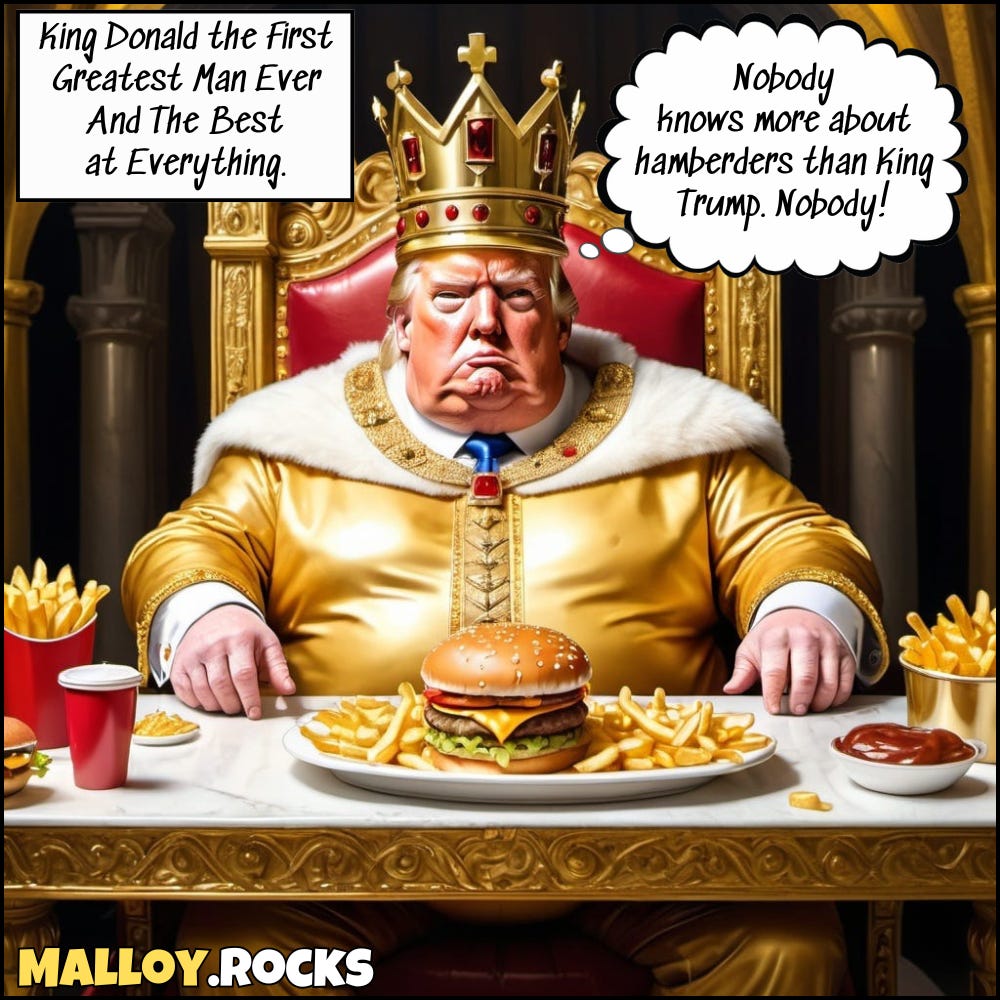
No one has added more to America’s debt than Trump. He’s living on a credit card, and he doesn’t care how much debt he runs up, because he has no intention of paying it back.
Trump is famous for not paying his bills. You think he gives a shit about America’s bills?
The financial collapse of previous empires would serve as a warning to Americans, if Americans knew anything about history.
But they don’t, so America is just gonna keep following the same suicidal path that killed all the other undefeatable empires.


I think what scares me the most about these historic scenarios is not the economic crisis but how vulnerable it leaves its people - vulnerable to invasion, to disease, and in our timeline, catastrophic climate events. When the Republicans wake up it may be too late. Widespread dangerous hurricanes, floods and fire wipe out communities and we’ve all seen it. It takes billions of dollars to rebuild, loss of life, and manpower. Rump needs to be stopped on so many levels.
The “peace” deal Witkoff, Kushner, and the Russians are submitting has the potential to implode the entire American economy if Trump gets on board with it. EU leaders, Canada, Japan and others have decided the US is no longer trustworthy when it comes to Russia, and they’re ready to teach us a very painful lesson.
They will crash our economy through the sale of US Treasuries, using the funds to counter Putin and free Ukraine.
trump did this. Putin did this. And the EU and other countries have decided World War III is not an option.